Le Guide › Wine Tourism
Neuchâtel Wine Region: Complete Guide to Swiss Wine Country
Lecture : 12 min · Mis à jour le 25 juin 2026
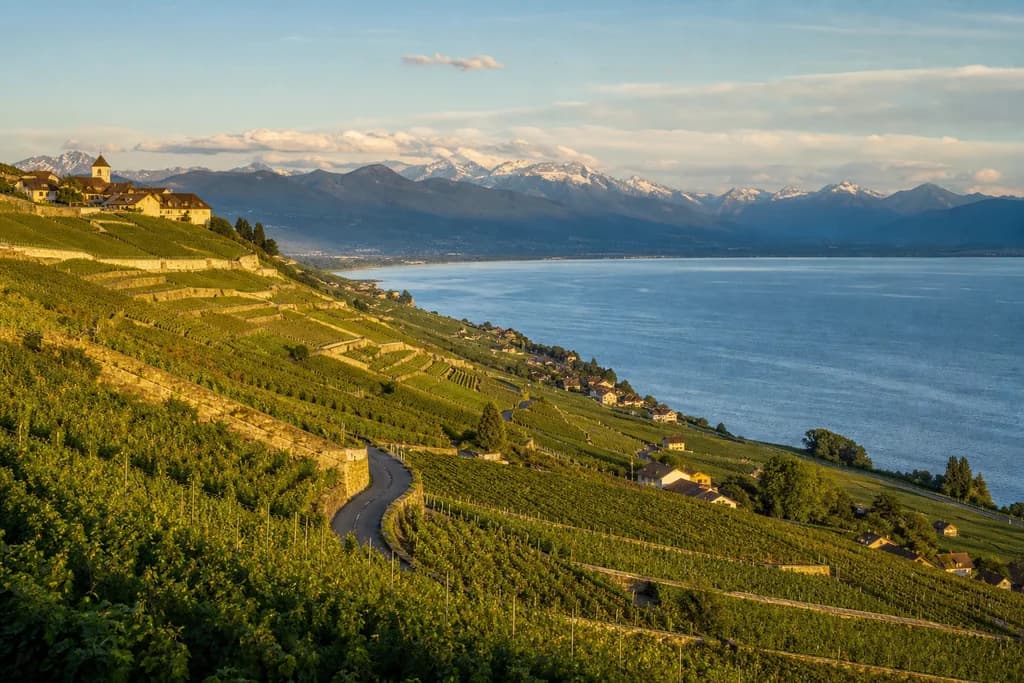
Planning a Swiss wine trip beyond the famous names? The Neuchâtel wine region is one of Switzerland's most rewarding discoveries: a compact vineyard landscape between Lake Neuchâtel and the Jura mountains, known for Pinot Noir, Chasselas and the historic Oeil-de-Perdrix rosé. This English guide explains what to taste, where to go, which wineries to visit and how to turn a short stay into a memorable wine-country itinerary.
Why Neuchâtel is Switzerland's hidden wine gem
Neuchâtel is not the Swiss wine region most international travellers hear about first. Lavaux has UNESCO terraces, Valais has dramatic alpine vineyards and Geneva is easier to associate with an airport. Yet for many visitors who actually spend time here, Neuchâtel becomes the surprise of the trip. The vineyards form a narrow, elegant belt along the northern shore of Lake Neuchâtel, backed by the wooded Jura and facing open water, soft light and distant Alpine views.
The vineyard area is small, roughly 600 hectares, which makes it manageable for a weekend but varied enough for serious tasting. Villages are close together, train stations sit near the lake, and the atmosphere is more local than commercial. You can walk from a medieval street to a cellar door, taste Pinot Noir with the person who made it, then reach Neuchâtel city for dinner without spending hours in a car. For anglophone travellers looking for Swiss wine tourism with authenticity rather than crowds, that compact scale is a major advantage.
The terroir sits between two strong influences. The Jura brings limestone, slope, forest and cool air. Lake Neuchâtel moderates temperature, reflects light and gives the wines a fresh, precise character. The result is not heavy or showy; it is a region of finesse, bright fruit, mineral whites, elegant reds and rosés with a serious local identity. If your search begins with “Neuchâtel wine region” or “Swiss wine Neuchâtel,” this is the place to understand why Swiss wine is so rarely exported yet so rewarding to drink in situ.
The wines of Neuchâtel: what to taste first
Pinot Noir is the red backbone of the canton. In Neuchâtel it usually shows red cherry, raspberry, spice and a fine-boned structure rather than the dense profile visitors may know from warmer New World regions. Some domaines make easy, fruit-driven bottlings for aperitif and casual meals; others produce more ambitious cuvées from old vines, selected parcels or oak ageing. For wine travellers, Pinot Noir is the best way to compare villages because small differences in slope, soil and exposure appear quickly in the glass.
Chasselas is the classic white grape of French-speaking Switzerland and remains essential to the Neuchâtel table. Expect freshness, subtle fruit, floral notes and a dry finish that works beautifully with cheese, fish and aperitifs. The local Non-Filtré style, released early in the year, gives Chasselas a cloudy, lively personality and is a seasonal marker for many residents. If you normally overlook neutral whites, taste Chasselas here with local food before judging it; the grape is designed for place and occasion.
Oeil-de-Perdrix is the wine many travellers remember by name. Literally “partridge eye,” it refers to a pale rosé colour traditionally made from Pinot Noir. The style is closely tied to Neuchâtel history and remains one of the strongest search terms for visitors researching Oeil de Perdrix wine. The best examples are not sweet summer rosés but dry, delicate, gastronomic wines: fresh enough for aperitif, textured enough for perch fillets, and distinctive enough to bring home as a story in a bottle.
Beyond the three classics, look for Pinot Gris, Chardonnay, Sauvignon Blanc, Gewürztraminer and local experiments with varieties such as Divico, Gamaret, Garanoir or Galotta. These specialties are useful in a tasting flight because they show how Neuchâtel producers balance tradition with curiosity. Ask the winery which bottle best expresses its own style; the answer often reveals more than a standard list of grape varieties.
The Neuchâtel wine route: from Vaumarcus to the city
The wine route is best imagined as a lake-shore ribbon running from Vaumarcus in the west toward Neuchâtel city and Saint-Blaise in the east. It is not a single tourist highway with big signs every few metres. It is a chain of villages, footpaths, small roads, rail stops and viewpoints that you can assemble into a half-day tasting, a full weekend or a slow cycling route. The pleasure comes from moving gently: one village, one view, one cellar, one meal.
Vaumarcus and La Béroche
Start on the western edge of the canton, where quiet villages, lake views and softer slopes make a gentle introduction before you move toward the larger wine communes.
Bevaix and Cortaillod
This is a compact area for relaxed tastings, family cellars and walks through old village streets before dropping back toward the lake shore.
Boudry and the Areuse
Boudry adds a historic castle, the cantonal wine museum and a useful stop for visitors who want culture as well as cellar doors.
Auvernier and Milvignes
Auvernier is the postcard heart of Neuchâtel wine country, with major estates, narrow lanes, stone houses and easy rail access from Neuchâtel city.
Neuchâtel and Saint-Blaise
Finish with urban restaurants, lake promenades, public-transport convenience and several producers close enough to visit without a car.
Auvernier, Cortaillod, Boudry, Bevaix and Saint-Blaise are the names most visitors should keep on a map. Auvernier gives the most immediate “Swiss wine village” feeling, Cortaillod and Bevaix are excellent for slower local discovery, Boudry adds wine heritage through the castle, and Saint-Blaise is a convenient eastern stop. Neuchâtel city is the natural base if you want hotels, restaurants, lake cruises, museums and easy trains.
Top Neuchâtel wineries to visit
The best Neuchâtel wineries to visit are not necessarily the biggest or most famous. For travellers, the right choice depends on transport, language, opening hours, group size and the style of tasting you want. The domaines below are real Caveneo producer profiles with tasting availability in the local data, but you should still confirm directly before travelling because small wineries adapt their schedules around vineyard work, bottling and harvest.
Auvernier
Caves du Château d'Auvernier
A landmark estate founded in 1603, ideal for visitors who want history, polished hospitality and classic lake-shore wines.
Auvernier
Domaine de Montmollin
A large family domaine with biodynamic work and a broad range that helps you compare Chasselas, Pinot Noir and specialties.
Auvernier
Domaine de la Maison Carrée
A respected biodynamic address for precise, characterful wines and a more intimate view of Auvernier terroir.
Colombier
Caves de Chambleau
A strong stop for visitors interested in expressive Pinot Noir, Chardonnay and a scenic position above the lake.
Cortaillod
Domaine des Landions
A focused address for Pinot Noir lovers and anyone exploring the Bevaix-Cortaillod part of the wine route.
Cressier
Domaine Hôpital Pourtalès
A useful eastern-canton stop to understand how limestone, exposure and village setting shift the profile of local wines.
Neuchâtel
Caves de la Ville de Neuchâtel
The easiest option for a car-free tasting day based in the city, close to hotels, restaurants, museums and the station.
Cressier
Cave des Lauriers, Jungo & Fellmann
A welcoming choice for tasting the eastern style of the canton and comparing Chasselas, Pinot Gris, Pinot Noir and Oeil-de-Perdrix.
Saint-Blaise
Domaine Saint-Sébaste
A practical final stage near Neuchâtel city, with village charm, lake access and strong public-transport links.
If you have only one day, choose three stops rather than six. A strong car-free plan is Neuchâtel city, Auvernier and Saint-Blaise, with lunch by the lake and dinner back in town. A more wine-focused plan could centre on Auvernier and Cortaillod, where you compare classic estates, biodynamic producers and Pinot Noir specialists. If you are driving, appoint a non-drinking driver or keep tastings small; Swiss road rules are strict and the villages are more enjoyable when you are not rushing between parking spaces.
Wine events: Caves Ouvertes, harvest and new wines
Events are the easiest way to turn a Swiss wine curiosity into a real travel experience. The flagship event is Caves Ouvertes Neuchâteloises, scheduled for 8 and 9 May 2026. During this weekend, cellars across the canton open their doors, visitors circulate with a tasting glass, and the region becomes much easier to explore without arranging every appointment separately. It is lively, sociable and practical for first-time visitors who want a broad overview.
For planning details, start with Caveneo's Caves Ouvertes Neuchâtel 2026 guide and the broader events calendar. May is excellent for spring energy, June brings Oeil-de-Perdrix tastings and lakeside evenings, September is harvest season, and late autumn introduces a more gastronomic mood. The Fête des Vendanges in Neuchâtel city is not a quiet technical tasting, but it is a major cultural celebration if your visit coincides with the end of September.
Harvest is beautiful but sensitive. Vignerons are busy, weather can change plans overnight, and cellars may have less time for casual visitors. If you come in September, book well ahead, keep your itinerary flexible and remember that the most memorable experience might be a vineyard walk at sunset followed by a simple, pre-arranged tasting rather than a long cellar tour.
Food and wine pairings in Neuchâtel
Swiss wine makes the most sense with Swiss food, and Neuchâtel gives you easy pairings. Chasselas is the safest first bottle with fondue because its freshness, moderate alcohol and discreet fruit cut through melted cheese without competing with it. Pinot Gris can also work when the fondue is richer, while sparkling or very fresh whites are useful if the meal includes charcuterie, pickles and bread before the cheese arrives.
Lake perch, often served as filets de perche, is the local pairing every visitor should try if it is on the menu. Chasselas, Chardonnay and Oeil-de-Perdrix are all good matches depending on the sauce and preparation. With butter and lemon, choose Chasselas. With a creamier plate, try Chardonnay. For a terrace lunch with salad, fries and a view of the lake, Oeil-de-Perdrix is hard to beat.
Local cheeses, dried meats, mushroom dishes and autumn game open the door to Pinot Noir. Lighter Pinot Noir works with aperitif boards and poultry; more structured cuvées fit roasted dishes, mountain cheeses and seasonal menus. The key is not to chase prestige. Ask the restaurant for a Neuchâtel wine by the glass, tell them what you are eating, and trust the local pairing culture.
How to get there and move around
Neuchâtel is easy to add to a wider Swiss itinerary. By train, it is roughly positioned between Bern, Biel/Bienne, Lausanne and Geneva, with connections from Zurich and Basel through the national rail network. International visitors often fly into Geneva or Zurich, take the train to Neuchâtel, then use the city as a base. This is usually simpler than renting a car immediately, especially if wine tasting is central to your stay.
From Neuchâtel station, local trains, buses and tram-style regional links connect several wine villages. Auvernier, Colombier, Boudry and Saint-Blaise are realistic without a car if you plan around timetables. Walking between every village is possible only for fit travellers with time, but short vineyard walks around one or two communes are very rewarding. Bring shoes suitable for slopes, stone lanes and occasional gravel paths.
Cycling the wine route is attractive in good weather because distances are short and the lake gives orientation. Electric bikes make the slopes much easier. Plan tastings conservatively, carry water and avoid treating the ride like a pub crawl. If you prefer driving, use it to reach one area, park once, and walk locally. The best wine days in Neuchâtel are slow, scenic and safe.
Best time to visit Neuchâtel wine country
April and May are ideal for first tastings, spring vineyard walks and the fresh mood of the new season. The vines are waking up, restaurants reopen terraces, and Caves Ouvertes gives visitors an efficient way to meet many producers. If your priority is discovery, May is one of the most practical months.
June, July and August are best for lake life. Days are long, swimming and boat trips can sit beside wine tastings, and villages feel relaxed. Book tastings earlier in the day if temperatures are high, then save the late afternoon for the lake shore. Summer is also the season when Oeil-de-Perdrix feels most natural: chilled, pale, dry and ready for an outdoor table.
September is harvest season and visually compelling, but it requires the most tact. Producers are under pressure, so spontaneous visits can be difficult. October offers golden light, calmer villages and excellent food pairings. November is interesting for new wines, cellar conversations and the transition toward winter dishes. December to March is quieter but not useless: plan private appointments, focus on Pinot Noir and use Neuchâtel city as a cultural base.
Practical tasting tips for international visitors
Book tastings in advance whenever possible. A short email in English is usually fine, but simple French greetings are appreciated. Mention your date, time window, number of people, whether you will buy wine, and whether you need the tasting in English. If you are a trade buyer, journalist or serious collector, say so clearly. If you are a curious tourist, that is welcome too; just help the producer prepare the right format.
Prices vary. Some simple tastings may be low-cost or credited against purchases, while guided visits, group formats and food pairings are usually paid. Ask before you arrive. A typical tasting might include three to six wines, a short explanation of the domaine, and the chance to buy bottles at cellar-door prices. It is normal to spit during tasting, especially if you visit more than one winery, and it is polite to buy at least a bottle if the experience was personal and free.
Bringing wine home depends on your destination. Travellers from the UK, US, Australia and Asia should check airline baggage rules and customs allowances before buying a full case. For a short trip, two or three carefully chosen bottles are often better than a heavy box: one Chasselas or Non-Filtré, one Oeil-de-Perdrix and one Pinot Noir will tell the story of the region clearly. Ask the winery for packaging suitable for checked luggage, and avoid placing bottles loose in a soft bag.
FAQ: Neuchâtel wine tourism
Is Neuchâtel wine available outside Switzerland?
Sometimes, but rarely in large quantities. Switzerland drinks most of its own wine, and Neuchâtel production is small compared with international regions. Specialist importers in the UK, the US or Asia may carry a few bottles, but the best selection is usually at the estate, in local wine shops or through direct producer sales.
What is Oeil-de-Perdrix wine?
Oeil-de-Perdrix is a pale rosé style traditionally made from Pinot Noir. In Neuchâtel it is treated as a signature wine: delicate in colour, fresh on the palate and especially good with lake fish, aperitif plates, summer lunches and lighter Swiss dishes.
Can I visit Neuchâtel wineries without booking?
A few cellars have regular shop hours, especially on Fridays, Saturdays or during events, but many tastings depend on appointments. International visitors should book ahead, explain group size and language needs, and confirm whether the visit is a simple tasting, a cellar tour or a paid experience.
Plan your Neuchâtel wine trip
Turn this guide into your own Swiss wine itinerary
Use Caveneo to map producers, browse real winery profiles and choose a bottle style before you arrive. Neuchâtel is compact: a little planning quickly becomes a full wine-country weekend.
À lire aussi
Guides liés sur les vins de Neuchâtel
Travelling with French-speaking companions or planning a deeper route? Caveneo also publishes a local guide to œnotourisme in Neuchâtel.
Read the French wine-tourism guide →